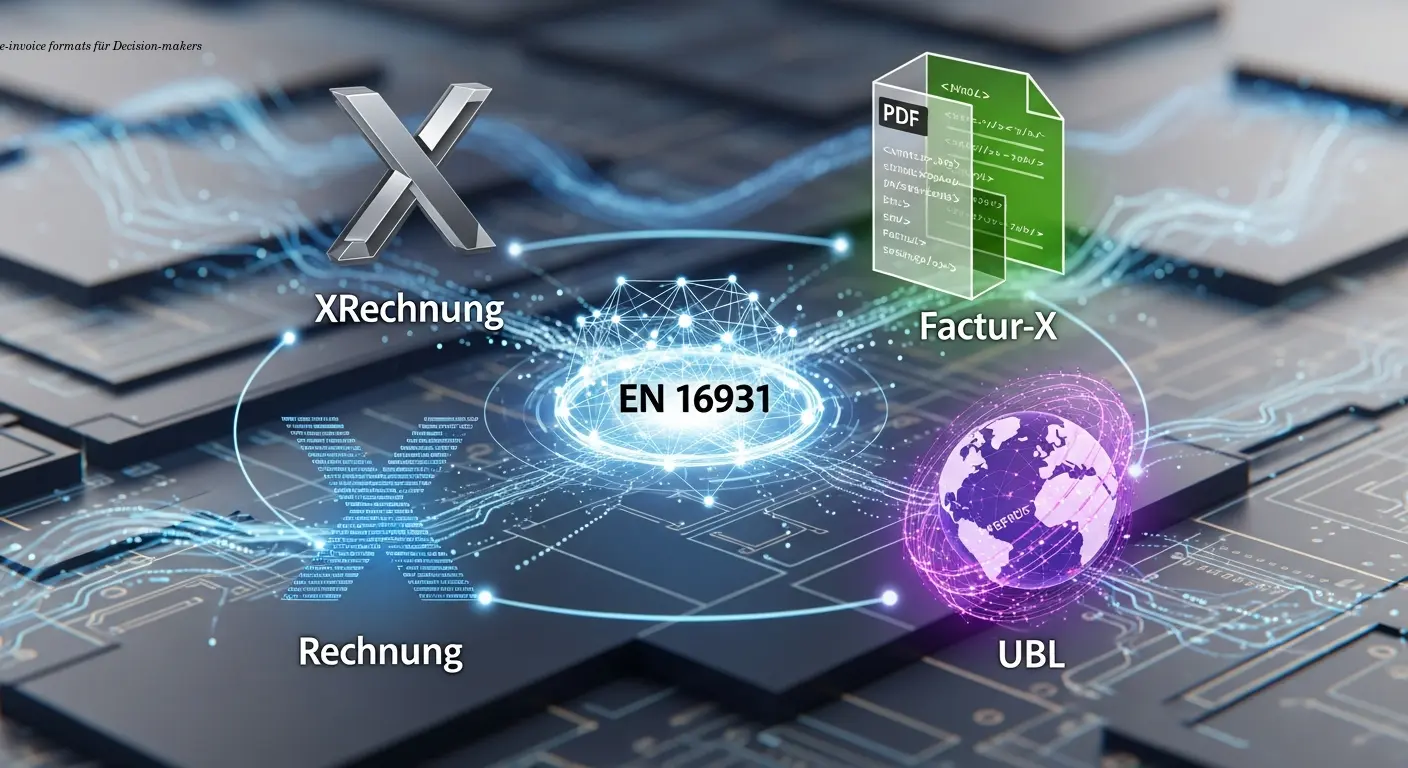
e-invoice formats XRechnung Factur-X UBL Explained
Comparing EU E-Invoice Formats: XRechnung, Factur-X, and UBL Explained
Estimated reading time: 8 minutes
Key takeaways
- All three main e-invoice formats (XRechnung, Factur-X, and UBL) implement the same European semantic standard EN 16931 but differ in structure and application.
- XRechnung is Germany’s pure XML B2G format with full machine readability; Factur-X is a hybrid PDF+XML format popular for B2B; UBL 2.1 is the broadly adopted international XML standard used with Peppol.
- Which format to use depends on target markets, customer requirements, and whether you need a human-readable PDF output.
- The EU is moving from simple PDFs toward structured machine-readable formats; most businesses operating across multiple EU countries will need multi-format support.
Table of contents
- Understanding the European Foundation: EN 16931 and Its Syntax Options
- XRechnung: Germany's XML Standard for Government Invoicing
- Factur-X and ZUGFeRD: The Hybrid Approach
- UBL: The International XML Standard Powering Cross-Border Invoicing
- Direct Comparison: XRechnung vs Factur-X vs UBL
- Practical Considerations for Business Decision-Makers
- Implementation Path: Making E-Invoice Formats Work for Your Organization
- Looking Ahead: The Future of Electronic Invoicing in Europe
- Frequently Asked Questions
Understanding the European Foundation: EN 16931 and Its Syntax Options
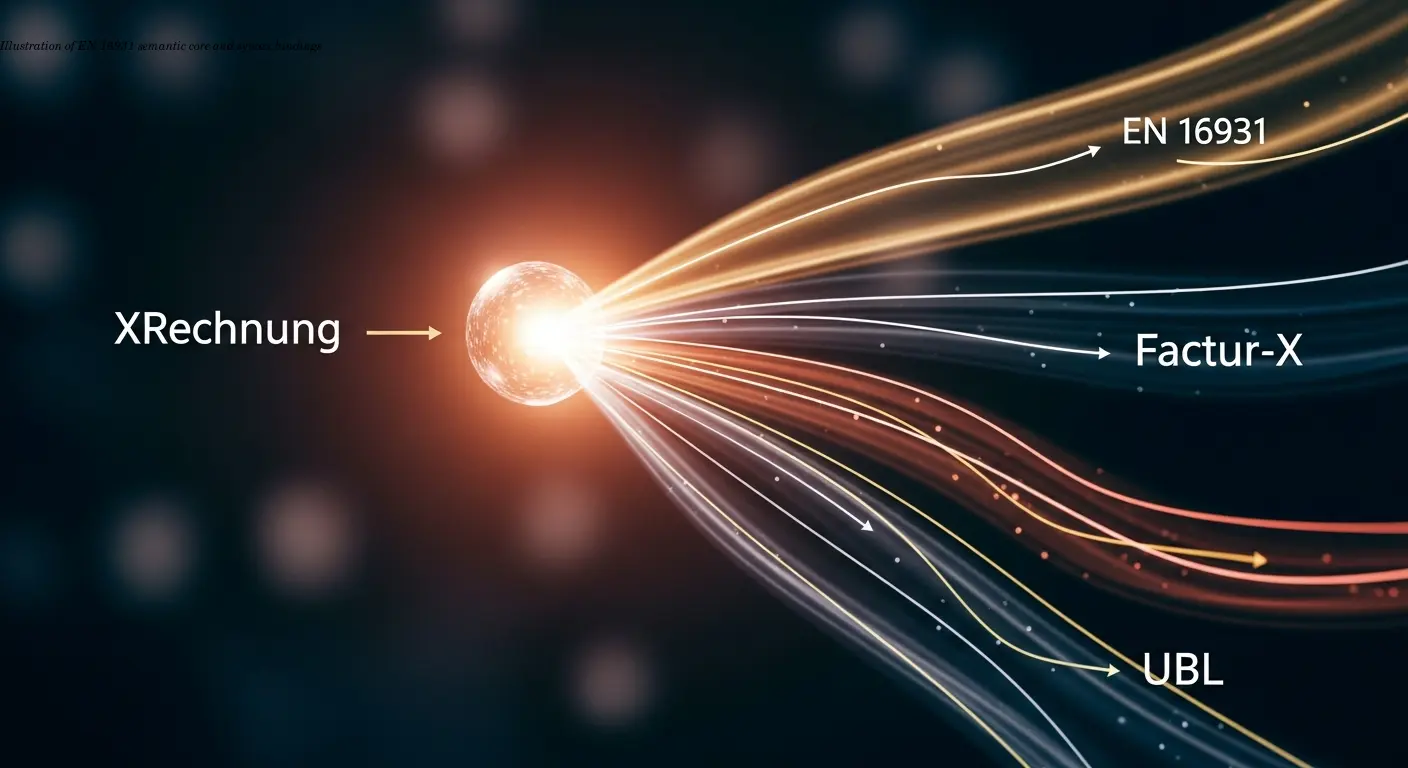
EN 16931 is the European semantic model created following directive 2014/55/EU to ensure a common set of data elements for electronic invoices used in public procurement across EU member states. Importantly, EN 16931 is a semantic specification — a blueprint listing the required invoice fields (seller name, tax numbers, line items, amounts, etc.) rather than a concrete file format.
Technical implementations of EN 16931 happen via syntax bindings. The standard officially recognizes two XML syntaxes: UBL 2.1 (Universal Business Language) and UN/CEFACT Cross Industry Invoice (CII). National implementations — often called CIUS (Core Invoice Usage Specifications) — such as XRechnung and Factur-X are built on top of these syntaxes.
Different countries chose different paths: Germany’s XRechnung can use either UBL or CII; France’s Factur-X uses CII embedded in a PDF container; Italy, Spain, and others created national profiles (FatturaPA, FacturaE) that map to the same EN 16931 core. The practical benefit is semantic interoperability: because they share EN 16931, conversion between formats is feasible.
For businesses, this means you can’t safely rely on a single format for all EU customers — you must understand specific national and customer requirements or use a tool that generates EN 16931-compliant invoices in multiple syntaxes.
XRechnung: Germany's XML Standard for Government Invoicing

XRechnung is Germany’s official e-invoice format for all government contracts and public procurement. If you invoice any German federal, state, or municipal authority, XRechnung is mandatory.
It is a pure XML format (no embedded PDF) and follows either the UBL 2.1 or UN/CEFACT CII syntax. The design emphasizes machine readability: government systems can automatically validate, route, and process XRechnung files without manual intervention.
The format is open and documented by the German coordination office (KoSIT), with validators and examples freely available. This openness has enabled broad adoption across ERP and accounting software. The main trade-off is human readability — XRechnung requires viewer software or rendering to produce a formatted invoice for people to read.
Factur-X and ZUGFeRD: The Hybrid Approach to Electronic Invoicing
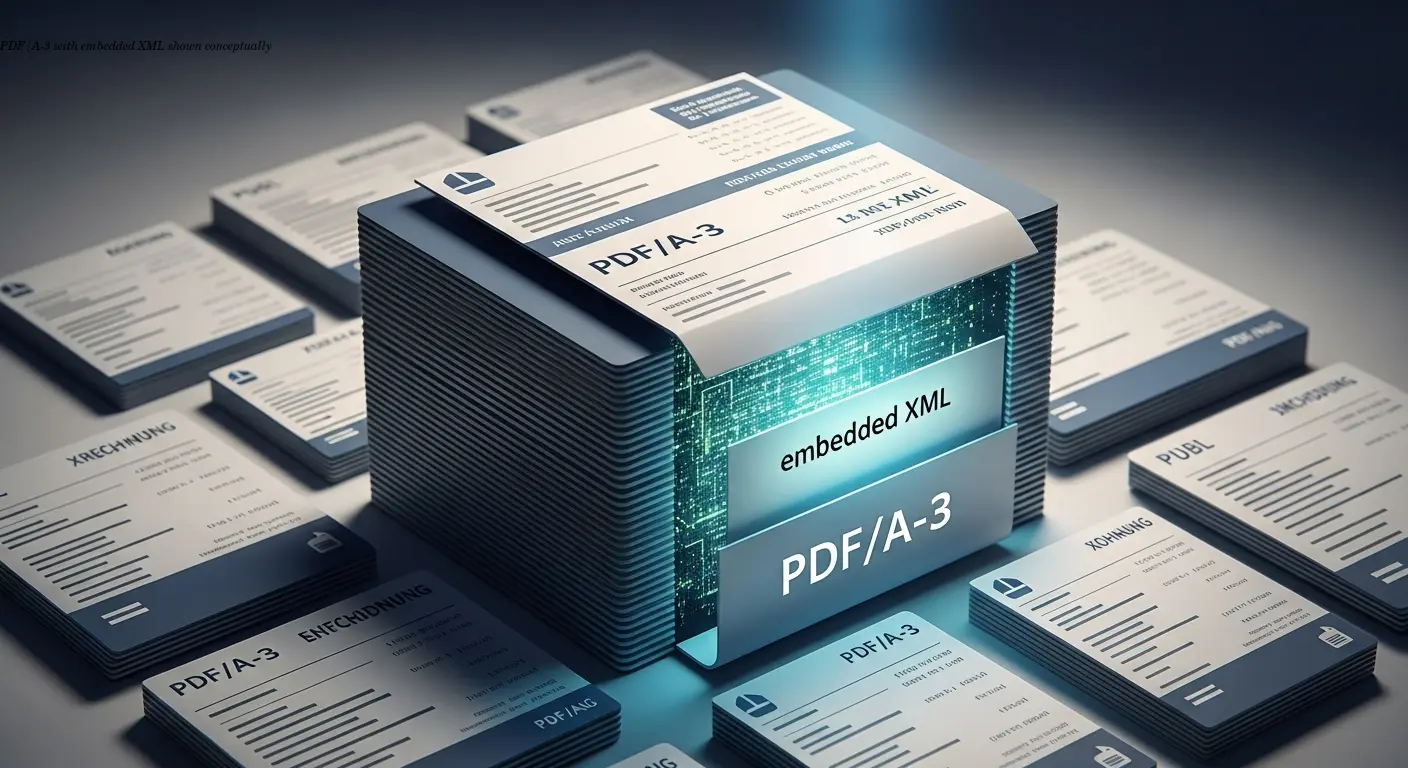
Factur-X (and the closely related German profile ZUGFeRD) combines human-readable PDF with embedded XML data: a hybrid PDF/A-3 container that holds a CII XML. The result is one file that is both visually accessible and machine-processable.
This hybrid approach is popular in France and Germany for B2B invoicing. France has endorsed Factur-X among approved formats for its national mandate, while many German companies use ZUGFeRD 2.x (EN 16931-compliant) for B2B despite XRechnung being required for B2G.
Factur-X provides multiple profiles (MINIMUM, BASIC, EN 16931, EXTENDED), enabling businesses to start with a simple footprint and add fields as automation needs grow. For organizations not ready to abandon PDFs, Factur-X is a pragmatic bridge to structured invoicing.
UBL: The International XML Standard Powering Cross-Border Invoicing
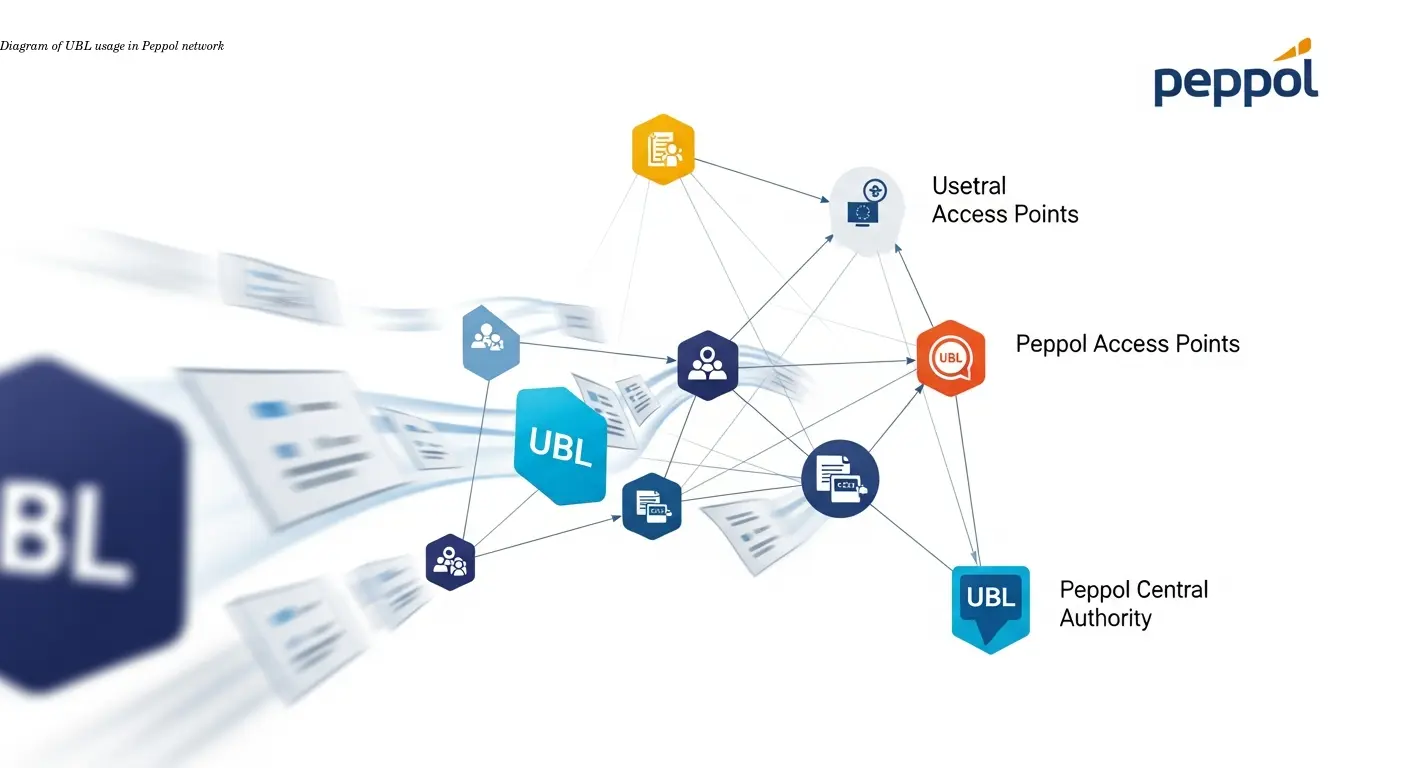
Universal Business Language (UBL) 2.1 is an open XML standard covering many business documents, with broad international adoption. The EU recognizes UBL 2.1 as one of two syntaxes for EN 16931 compliance.
A major strength of UBL is its adoption by the Peppol network, which enables cross-border document exchange. Peppol BIS Billing 3.0, based on UBL, is widely used for public procurement and increasingly for private transactions.
Many EU countries base their national e-invoice specs on UBL. For businesses operating across multiple countries, UBL support and Peppol connectivity simplify cross-border invoicing through standardized addressing, routing, and delivery.
Direct Comparison: Choosing Between XRechnung vs Factur-X vs UBL
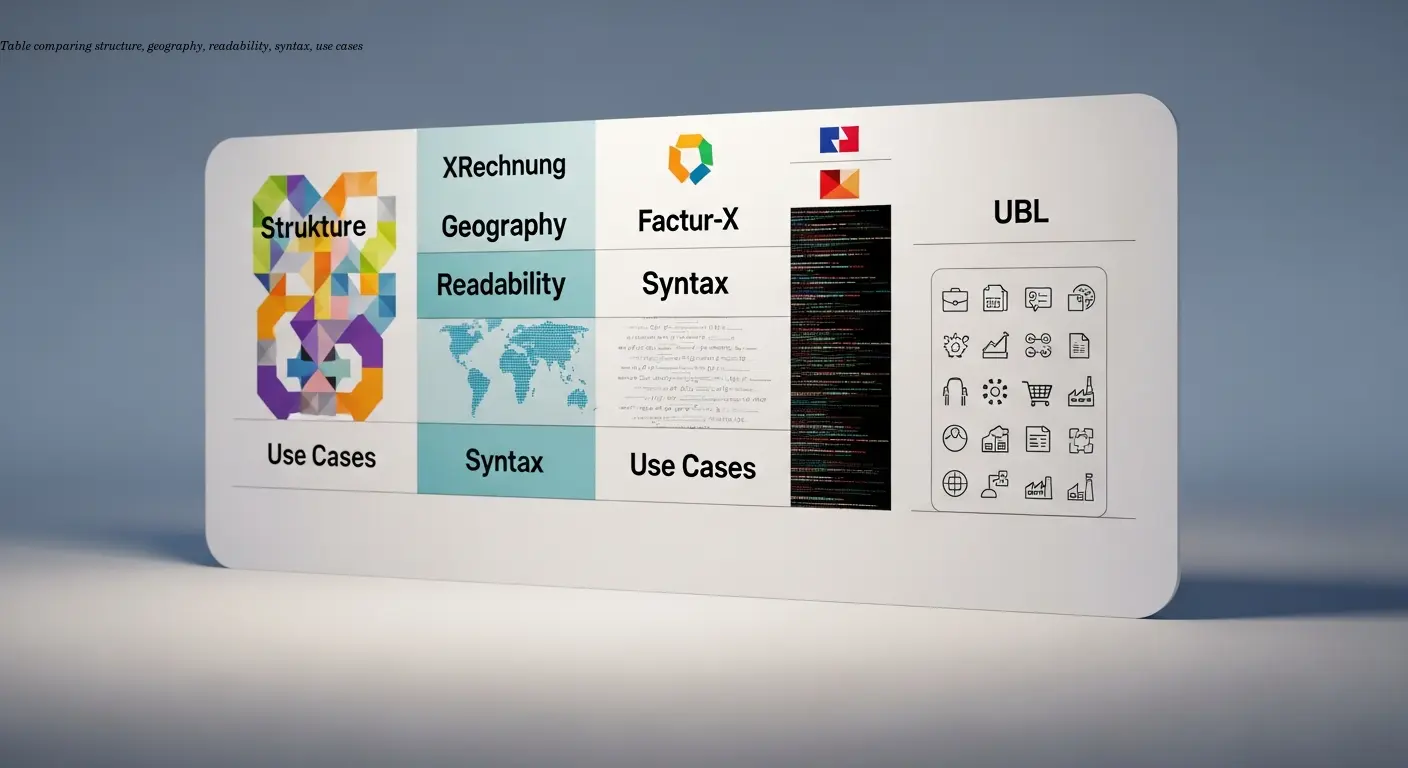
Technical structure: XRechnung and UBL are pure XML; Factur-X is PDF with embedded XML.
Geographic focus: XRechnung is mandatory for German B2G; Factur-X is widely used in French-German B2B contexts; UBL has the broadest international acceptance via Peppol.
Human readability: Factur-X includes a PDF that anyone can open; XRechnung and UBL need a renderer for a readable layout.
Syntax foundations: XRechnung can use UBL or CII; Factur-X uses CII wrapped in PDF; UBL uses the UBL 2.1 schema. All comply semantically with EN 16931.
Use cases: XRechnung for German B2G efficiency; Factur-X for B2B where visual review matters; UBL for cross-border interoperability.
Practical Considerations for Business Decision-Makers
Regulatory compliance is first: Germany requires XRechnung for B2G; France mandates structured invoices (Factur-X, UBL, or CII). Non-compliance can delay payment and trigger penalties.
Customer requirements often dictate the format in B2B. Large customers may specify preferred formats during onboarding; many suppliers maintain multiple format capabilities to match top customers.
International scope: If you invoice across many EU countries, UBL and Peppol integration become essential. Map revenue by market to prioritize formats.
Internal capabilities: Pure XML formats require ERP or middleware support; hybrid Factur-X can be easier for teams accustomed to PDFs.
Future-proofing: Choose flexible solutions that support multiple formats and handle specification updates. Cloud platforms often manage updates automatically.
Implementation Path: Making E-Invoice Formats Work for Your Organization

Audit your invoicing landscape: list countries, government vs private customers, invoice volumes, and special data needs.
Prioritize formats based on audit results — most businesses support two or three formats rather than all at once.
Build vs buy: Large enterprises may build integrated solutions; SMBs often benefit from specialized platforms that handle XML generation, validation, and delivery. For example, services like e-rechn.de converter provide ready-made support across EU formats.
Test thoroughly with official validators (Germany offers XRechnung validators). Passing validation is necessary but confirm customers accept the data fields they expect.
Plan for evolution: Regulations change; choose solutions that adapt without breaking existing functionality.
Looking Ahead: The Future of Electronic Invoicing in Europe
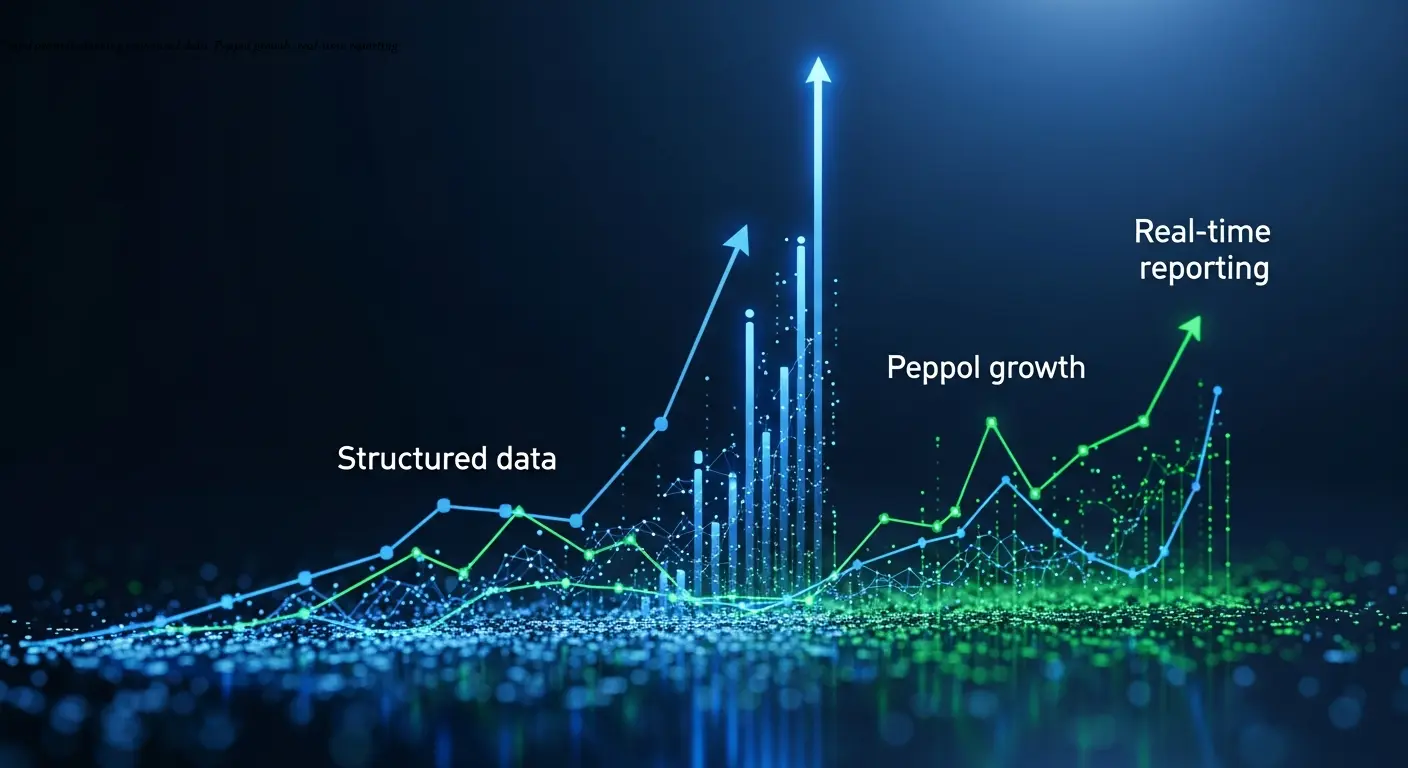
Structured data will become mandatory across more transaction types and countries. France’s phased mandate and Italy’s domestic e-invoicing requirement are examples of this trend.
Peppol expansion continues, turning a public procurement network into a broader cross-border delivery channel for private and public transactions.
Real-time reporting and tax visibility push businesses toward platforms that transmit invoices through government channels or certified networks.
Format convergence around EN 16931 makes format conversions more reliable; tools that understand the European core will map national differences more accurately.
Automation and AI will leverage structured invoices for invoice matching, fraud detection, and cash-flow forecasting — turning compliance into operational advantage.
Frequently Asked Questions
What is the difference between XRechnung and Factur-X?
XRechnung is a pure XML format used primarily for German government invoicing (B2G), containing only structured data with no visual component. Factur-X is a hybrid format that combines a human-readable PDF with embedded XML data, widely used for business-to-business transactions in France and Germany. Both comply with EN 16931, but XRechnung prioritizes machine processing while Factur-X maintains visual readability.
Can I use a single format for all EU countries?
No single format covers all EU requirements, though UBL comes closest due to its international adoption through Peppol networks. Different countries mandate specific formats for government invoicing – Germany requires XRechnung, France accepts Factur-X/UBL/CII, Italy uses FatturaPA. Most businesses operating across Europe need to support multiple formats or use a service that can generate country-specific formats as needed.
Is a PDF invoice considered an electronic invoice in the EU?
Not anymore in most cases. Simple PDF invoices sent by email are increasingly classified as "scanned paper invoices" rather than true electronic invoices. To convert PDF to structured e-invoice formats, start with a conversion workflow before mandates hit. EU regulations and national mandates require structured, machine-readable formats (XML-based like XRechnung, UBL, or hybrid formats like Factur-X). France explicitly excludes simple PDFs from its e-invoicing mandate starting with the rollout phases.
What is EN 16931 and why does it matter?
EN 16931 is the European standard that defines the core data elements required in an electronic invoice for public procurement. It doesn't specify a technical format but establishes a semantic model – the information that must be present. XRechnung, Factur-X, and UBL all implement this standard using different technical approaches (syntaxes), ensuring basic interoperability across European e-invoicing systems.
Do I need special software to create compliant e-invoices?
Yes, generating compliant e-invoice formats requires software capable of producing valid XML in the required syntax (UBL, CII, etc.) and ensuring all mandatory data fields are included. Many modern ERP and accounting systems have added this capability. Alternatively, specialized platforms like e-rechn.de provide user-friendly interfaces for creating EN 16931-compliant invoices in multiple formats without requiring technical XML knowledge.
What happens if my e-invoice doesn't validate?
Invalid e-invoices will be rejected by recipient systems, particularly in government procurement where automated validation is standard. This delays payment and may require you to correct and resubmit the invoice. Common validation failures include missing mandatory fields, incorrect data formats, or syntax errors in the XML. Using validators during invoice creation helps catch errors before submission.
Which format should small businesses use?
Small businesses should choose formats based on their customer base and markets. For German B2G customers, XRechnung is required. For French or German B2B customers, Factur-X offers the easiest transition from PDF workflows. For international operations, UBL provides the broadest compatibility. Many small businesses benefit from using a service that supports multiple formats rather than implementing each format separately.
How is Peppol related to e-invoice formats?
Peppol is a network infrastructure for exchanging business documents, not a format itself. It primarily uses UBL 2.1 format (specifically Peppol BIS Billing 3.0 for invoices). Peppol handles the secure transmission and routing of documents between trading partners across borders. Think of UBL as the language and Peppol as the postal system that delivers messages written in that language.
Related articles
Make X-Invoice Essential Guide for Finance Teams
Learn how to make x-invoice from PDF using AI/OCR tools, ensure EN 16931 compliance, and streamline finance and ERP workflows. Practical steps and expert tips.
About the author

Alexander Lutsyuk · Founder & Operator
Alexander Lutsyuk is the founder of Algoran and runs E-Rechn.de. He has worked for years in automation, digital content and SEO, currently as an on-page SEO adviser at SEO-Küche Internet Marketing GmbH & Co. KG. With E-Rechn.de he combines hands-on automation expertise with the practical demands of the EU e-invoicing mandate: XRechnung, ZUGFeRD, Factur-X and EN 16931. He holds an M.Sc. from Humboldt University of Berlin and is a BVDW-certified specialist.
Education: Humboldt-Universität zu Berlin
BVDW-certified specialist